
Working and living in today’s society is ever more complex much like how a kayaker experiences battling the white-water rapids.
Trying to stay a float, upright, and not knowing what is a head of him, is surely full of unknowns.
But how do we make some of those unknowns become knowns? I believe we have to look at what complexity science has to offer us. That is, according to Dr. Chris Mowles, there is two World Views:”Mechanical” & “Complexity”.
“Mechanical WorldView” views the idea that the world works like a machine. It is highly related to horizontal development which we will talk about later.

Some of the characteristics of a ‘Mechanical’ worldview is that:

(1) the future is a predetermined path inexorably unfolding from the present, (2) the world can be understood by breaking it down into constituent parts, and these can be dealt with in piecemeal fashion, (3) there is no learning, variety, adaptation, innovation, or surprise, and (4) in a mechanical worldview, managers or leaders are expected to control organizations and what happens in them.
These expectations of control make little sense where the world is emergent and complex, and this tension between expectations and reality can be a source of considerable personal stress.
”Complexity WorldView” sees the world as essentially interconnected, and rich with forms and patterns that have been shaped by history and context. The complexity worldview is very much influenced by vertical development.
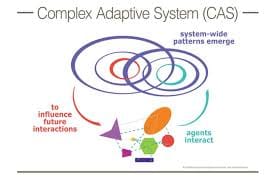
The ‘Complexity’ worldview sees the world as essentially interconnected, and rich with forms and patterns that have been shaped by history and context reminding us of: (1) the limits to certainty, and (2) an emphasis on the idea that things are in a continual process of ‘becoming’ and that there is potential for startlingly new futures where what emerges can be unexpected and astonishing.

Moving away from this Mechanistic mindset worldview to a Complexity worldview requires a unique lens to help see both a sense-making and vertical development process that Ashby’s Law of Requisite Variety (LoRV) and Integral Agile can help clarify.
LoRV references the idea that “only variety can absorb variety.” In other words, the complexity of a control system must be equal to or greater than the complexity of the environment it seeks to regulate. If you or one’s organization is dealing with both enormous internal and external complexities, you probably would like to get a better grasp on that complexity in efforts to be more effective and efficient requiring one to devise a system to tackle that complexity. That system would have to be equal or greater to or greater than the complexity of that environment it seeks to regulate.
Integral Agile requires a focus not only on horizontal development with focus on new knowledge, methods, skills within an already current paradigm of understanding, rather, vertical leadership develops one’s cognitive capabilities to utilize these multiple horizontal skills to increase one’s capabilities to better interpret internal and external environments. As one develops higher vertical capabilities, one’s “lens” of understanding and perspectives increases which is needed in a complex world.
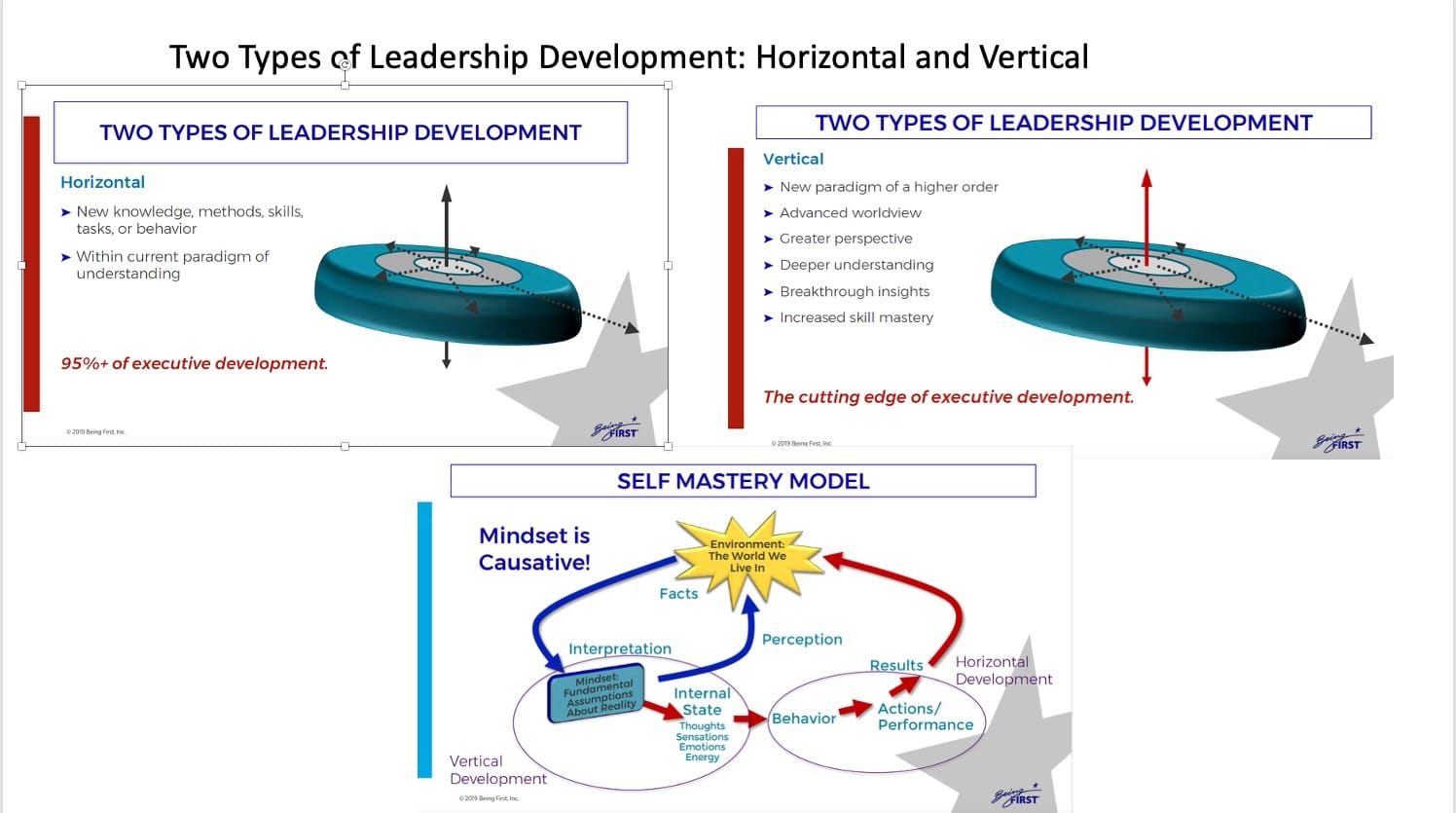
The Integral Agile is a meta framework with uses a “lens”

comprised of four quadrants: “I” - Leadership & Mindsets, “IT” - Practices & Behavior, “We” - Organizational Culture & Relationships, and “ITS” - Organizational Architecture. One sees internal and external environments using all the four quadrants as one fractal lens. Hence, the need to develop higher cognitive vertical abilities to see and synthesize all four quadrants at one time.
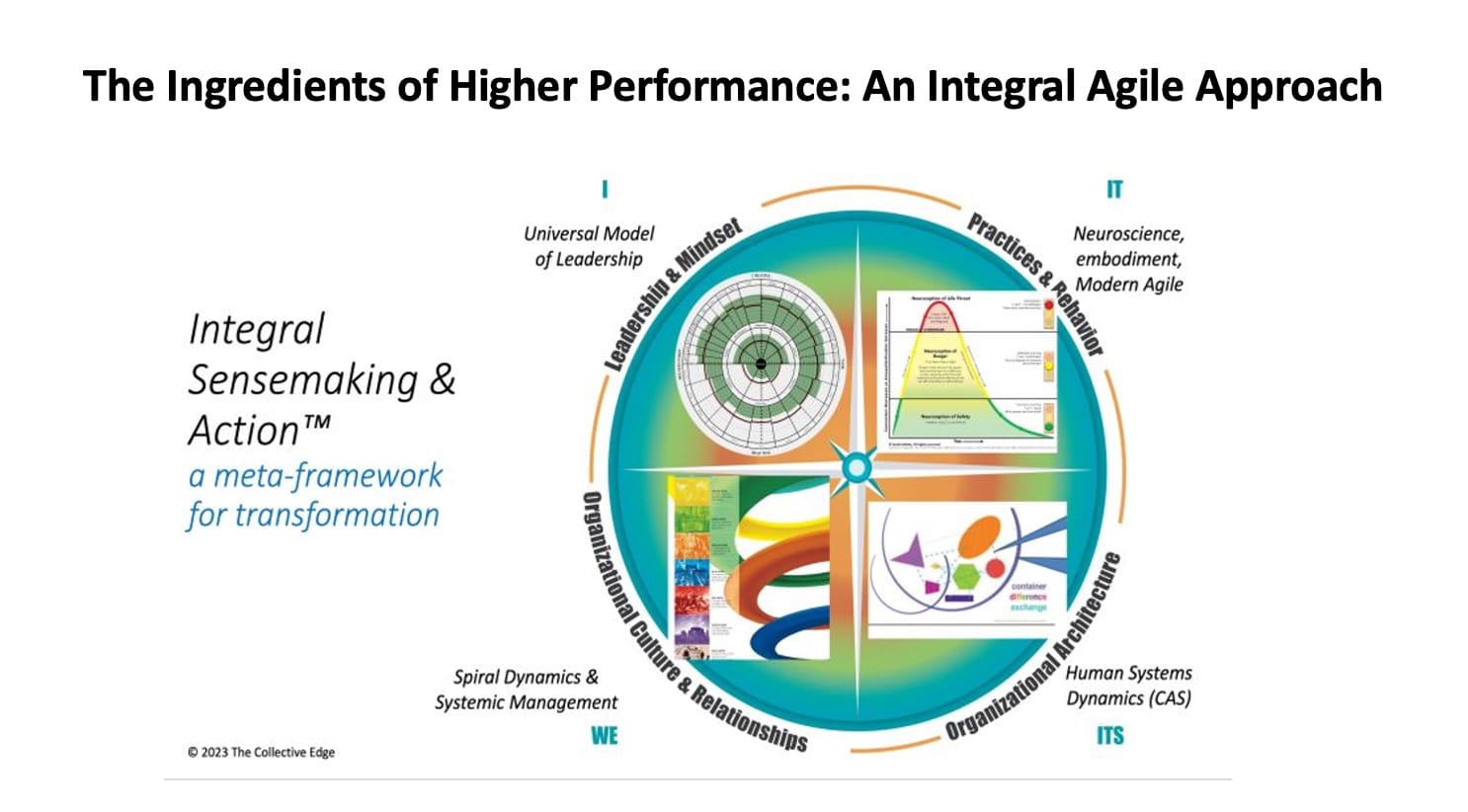
LoRV: “only variety can absorb variety”
And Integral Agile is the system that is equal or greater than the complexity of that environment it seeks to regulate.
