
What's your take on this type of workforce management? Is it an effective Agile workforce approach? In Hackman (1986), he references Richard E. Walton's 1986 term, "Commitment Model," as this new workforce type.Not sure if its new, since this research was done in the mid-1980's, but it extremely informing to examine how this new workforce type was envisioned and how it is potentially being applied in today's Agile workforce theatre.
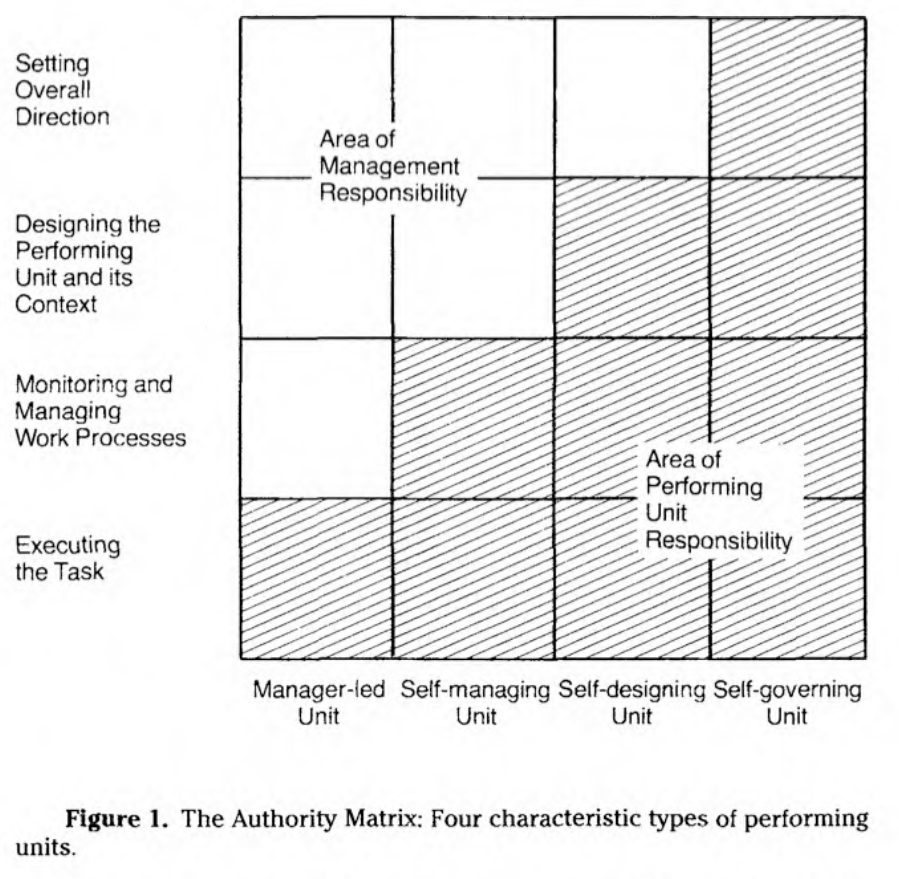
Hackman's 1986 research compares and contrasts the traditional managed-led unit with the Self-managed unit, but goes on to reference self managed teams as the self-managers. Hackman gives us some great insights and good practices on how to transition not only the team to this type of "Commitment Model", but also for the traditional "outgoing" manager, as well. The tradition outgoing manager is not going too far, rather the role is merely changing. Hackman gives the tradition manager effective prescriptive guidelines on how to develop and support the self-managing team.
The traditional manager has to develop additional manager skill sets to learn not to interfere with the SMT's strategic problem-solving strategies, rather must set the overall direction for the SMT. Also, traditional manager must only supply the SMT needed "bread-crumbs" of consultation, so not to come off as the manager, "said so" and to not, create a consultant dependency on the manager. For a traditional-manager, this approach is completely foreign and requires the manager and SMTs to work together, to devise the "working agreements" on how they all work better together.
At the team level, Not only team working agreements are needed, rather the organization as a whole must setup "transition practices" to help guide the traditional management teams to understand how to function and provide cross -dependency support for the new SMTs.
References
Hackman, J. R. (1986). The psychology of self-management in organizations. American Psychological Association.
